Divi Theme Review
Last modified: August 6, 2026

Divi is a premium multipurpose WordPress theme from Elegant Themes, built around its own visual page builder so you don’t need to add Elementor or another builder separately. It works for any site type: portfolio, business, blog, eCommerce, or agency, which is why it also appears among WordPress themes built for video. The theme and its builder come together in a single license, which is the main reason Divi became one of the most-purchased themes in the WordPress ecosystem.
This review covers what Divi actually delivers in practice: the core builder features, how the new Divi 5 release affects your decision, current pricing, and where Divi genuinely falls short compared to alternatives. The goal is to give you enough information to decide whether Divi is right for your specific project, not to push you toward a purchase.
Divi 5: Should You Wait or Start Now?
Elegant Themes is rebuilding Divi from the ground up with a React-based architecture under the Divi 5 name. The goals are faster loading performance and better compatibility with the WordPress block editor. Divi 5 entered public beta in mid-2026, and existing Elegant Themes subscribers can opt in.
Here is what that actually means for someone making a purchase decision today:
- Building a new site now: Start with Divi 4. It’s stable, fully documented, and has a large community. Divi 5 beta is still maturing, and building a client site on beta software carries unnecessary risk. You can migrate later using Elegant Themes’ migration tool.
- Considering whether to buy now or wait for Divi 5: Buying now makes sense. Divi 4 and Divi 5 are covered under the same license, so purchasing today gives you immediate access to Divi 4 and automatic access to Divi 5 when it reaches stable release.
- Running an existing Divi 4 site: No action required. Divi 4 continues to receive security updates. There is no deadline to migrate, and Elegant Themes has confirmed Divi 4 support continues alongside Divi 5.
- Migrating an existing Divi 4 site to Divi 5: Wait until Divi 5 hits stable release and the official migration tool is confirmed. The React rewrite means Divi 5 is not backward-compatible with all Divi 4 layouts without migration steps.
Who Should Skip Divi
Most Divi reviews tell you who should buy it. Few tell you who shouldn’t. Here are the cases where a different tool is the better choice:
- Someone building their first personal site on a tight budget. Elementor Free plus a lightweight theme gives you a functional site at no cost. Divi requires a paid license from day one. If budget is the main constraint, start with the free path.
- Someone who plans to hand the site off to a non-technical client. Divi’s interface is approachable, but the full feature set has a learning curve. If the client will need to do routine edits without support, a simpler block theme may cause fewer issues over time.
- Developers building sites that need to be theme-agnostic. Divi Builder content is stored in Divi’s proprietary format. Moving to a different theme or editor later requires rebuilding pages from scratch. If long-term portability matters, a block-based approach using the native WordPress editor is a better fit.
- Sites where page speed is non-negotiable out of the box. A Divi site without speed optimization typically scores in the 50-65 range on Google’s PageSpeed Insights mobile test. With caching, image optimization, and a CDN it regularly reaches 80 or higher, but that requires deliberate effort. Sites that need top Core Web Vitals scores from day one will have less friction starting with a lightweight block theme.
* This button will show the rest of the post and open up an offer from a vendor
What is Divi?
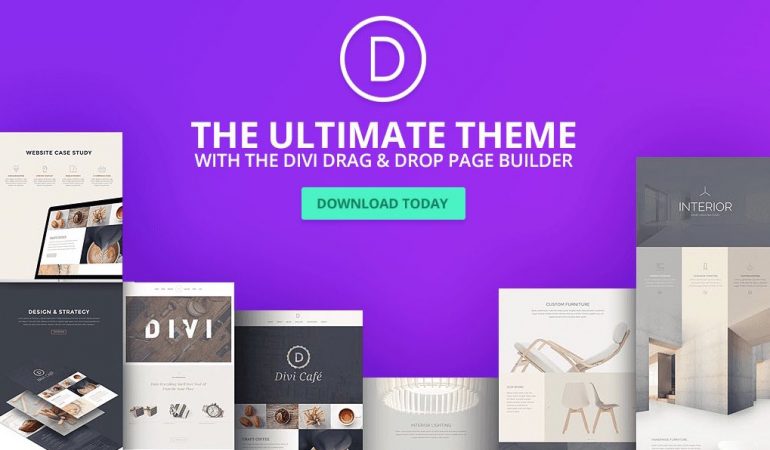
Divi is the flagship theme from Elegant Themes. It’s sometimes called a “mega theme” because it’s designed to handle virtually any website type without being niche-specific. You can use it to build a travel blog, a news site, a professional services page, an eCommerce store, or an agency portfolio, all with the same theme.
Divi is accessible to users of all technical levels. Installation works like any other WordPress theme, no coding knowledge is required, and it’s functional right after activation. It doesn’t need extra configuration to get a working site, unlike some frameworks that require template setup before they’re usable.
What separates Divi from most WordPress themes is that it includes its own page builder, Divi Builder, so you don’t need to purchase a separate tool like Visual Composer or Beaver Builder alongside it. Everything needed to build and customize your site comes in the single Divi purchase. This is the primary reason Divi’s pricing looks competitive when compared against a theme plus a separate page builder — you’re paying for both in one transaction.
Features of Divi
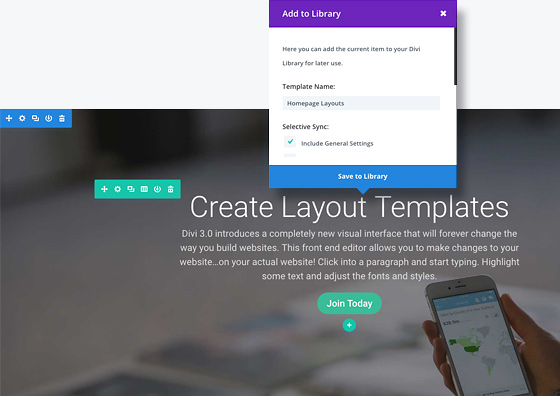
The standout feature that makes Divi so popular is that it’s an all-in-one solution – the theme and the page builder come together, so everything needed to build and customize a site is included from day one. Here are the key features:
- Real-time front-end editing: changes appear as you make them in the Divi Builder, so you don’t have to save and reload to see how things look.
- Divi is translatable into 32+ languages, making it a practical choice for multilingual sites or non-English markets.
- The Divi Module Customizer lets you set defaults for each content module so your design stays consistent without manually styling every element.
- All Divi layouts are responsive – everything adjusts automatically for desktop, tablet, and mobile screen sizes.
- Drag-and-drop layout builder: build pages visually without writing code. Move sections, rows, and modules freely.
- A large library of pre-built content modules covers most common website elements – pricing tables, testimonials, galleries, CTAs, sliders, and more.
- Layouts can be saved to the Divi Library and exported/imported across different sites – useful if you’re building multiple sites with consistent design.
Divi vs Elementor
The most common comparison Divi buyers make is against Elementor. Both are visual page builders, but they work differently. Divi is a theme with a builder built in – you buy a theme license from Elegant Themes. Elementor is a plugin that works on top of any WordPress theme – the free version is available from the WordPress plugin directory.
Divi’s advantage is the all-in-one pricing: one license covers unlimited sites and includes the builder, theme, and all future updates. Elementor Pro is priced per site (or in bundles). For agencies or developers building multiple sites, Divi’s lifetime license at $249 often works out cheaper than multiple Elementor Pro licenses.
Elementor’s advantage is the free tier. You can build a functional site with Elementor free without spending anything, then upgrade to Pro when you need the Theme Builder or WooCommerce widgets. Divi requires a paid license from day one. For someone building their first site on a budget, that’s a meaningful difference. For someone building sites professionally, Divi’s unlimited license model wins on cost.
Using Divi
Since Divi is a premium theme, you purchase it directly from Elegant Themes – it’s not available on WordPress.org. After purchase, download the zip file and install it via Appearance → Themes → Add New → Upload Theme, like any other WordPress theme. Once active, Divi adds its own menu item to the WordPress sidebar where you’ll find the main settings panel.
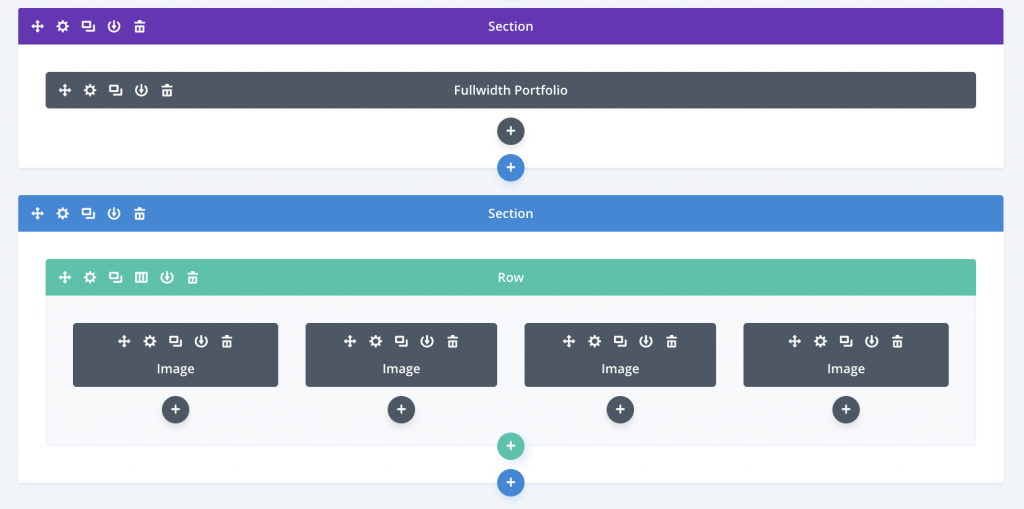
A good starting point is building your homepage. Create a blank page, set it as the front page in Settings → Reading, then open it in the Divi Builder. Pages are structured in sections → rows → columns → modules. The interface is visual and fairly self-explanatory – if you’ve used other builders like Elementor, the workflow will feel familiar. Divi also offers a set of pre-made layout packs you can import as a starting point rather than building from scratch.
Check that any changes made in the builder don’t break the desktop or mobile layout – Divi’s responsive controls let you adjust visibility and spacing per device type within the builder itself.
Pricing
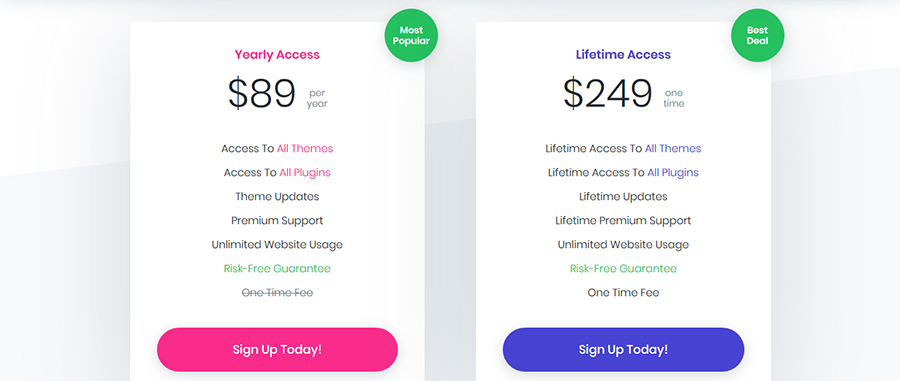
Purchasing Divi means buying access to the Elegant Themes catalog – not just the Divi theme by itself. There are two options:
- Yearly access: $89/year. Includes Divi, all other Elegant Themes products, updates, and support for 12 months.
- Lifetime access: $249 one-time payment. Same access, permanently – including all future updates.
Both plans come with licenses for unlimited sites, so you can use Divi on every site you build without additional per-site charges. That makes the lifetime option particularly good value if you’re managing multiple client sites or building several projects over time.
The yearly plan makes sense if you’re testing the theme or not committed long-term. The lifetime plan is the better deal for anyone who plans to use Divi regularly.
Cons to Divi
Divi is a strong theme, but there are real trade-offs worth knowing before you commit:
Shortcode/builder lock-in: If you ever switch away from Divi, you’ll lose all your page builder layouts. The content lives in Divi’s proprietary format, not in standard WordPress blocks. This isn’t unique to Divi (most page builders have the same issue) but it’s worth knowing upfront, especially for agencies that inherit sites from clients.
Updates require an active subscription: Most other premium themes provide free updates as long as you’ve purchased the license once. Divi requires an active Elegant Themes membership to receive updates, including security patches. Letting the subscription lapse means missing important fixes. Budget for the renewal cost if you plan to run Divi long-term.
Page speed requires deliberate optimization: Divi Builder adds a significant amount of HTML to each page compared to a block theme or lightweight theme. A typical Divi site without optimization scores in the 50-65 range on Google’s PageSpeed Insights mobile test. That’s not a rough estimate; it’s consistent across fresh Divi installations tested on standard shared hosting. With a caching plugin (LiteSpeed Cache or WP Rocket), image optimization, and a CDN, scores regularly reach 80 or higher. It’s achievable, but it requires a specific optimization pass that other theme choices don’t.
Documentation gaps for developers: The documentation covers the visual builder thoroughly and is aimed at beginners. Developers who want to extend Divi programmatically, customize it through child themes, or integrate with REST API endpoints will find the developer documentation significantly thinner than what’s available for themes built around the WordPress block editor.
Learning curve for advanced features: The visual builder is approachable for basic layouts. Divi’s more powerful features (the Theme Builder, global presets, custom CSS per module, and the Role Editor for client access control) each have their own learning curve. Plan for real time investment before you’re using Divi at full capability rather than just for simple pages.
Who Should Buy Divi?
Divi makes the most sense for web designers and developers who build multiple WordPress sites. The unlimited license means you pay once (or annually at a predictable rate) and use it across every project without per-site fees. The large layout library speeds up client delivery. And the active Elegant Themes community means you’re rarely the first person to encounter a specific use case or compatibility problem.
It’s less suited to someone building a single personal site on a tight budget (Elementor Free or a lightweight block theme can accomplish similar results at no cost), or to anyone who plans to switch themes frequently (Divi’s builder content doesn’t transfer cleanly to other themes or editors).
If you’ve already decided on Elementor and want to understand the full setup process, the guide on building a WordPress website with Elementor covers every step from domain registration to publishing your first pages.
Final Thoughts: Is Divi Worth It?
Divi earns its popularity. The all-in-one approach (theme plus visual builder, unlimited sites, a large library of modules and layout packs) gives you significant design capability without patching multiple tools together. The lifetime license at $249 is particularly good value for anyone building multiple WordPress sites over several years.
The downsides are real but manageable: plan for a speed optimization pass after setup, be aware of the subscription requirement for ongoing updates, and understand that Divi content doesn’t travel cleanly to other themes if you ever switch. None of these are dealbreakers for the audience Divi is built for (multi-site developers and agencies), but they’re meaningful limitations for someone building a single site on a tight budget.
If your priority is page speed out of the box, or you need a theme your client can maintain without ongoing support, a lighter block-based theme may be a better starting point. If you’re building multiple sites and want a consistent toolset across all of them, Divi’s value proposition holds up well against any alternative at a similar price point.
Related Posts



 Website Maintenance – Use Promocode: scanwp
  Advanced JetPlugins for Elementor
  Semrush 14 days trial
  Kinsta – Managed WordPress Hosting
  Bluehost Hosting