
4 Best WordPress Wiki Plugins Compared - 2026
Last modified: July 9, 2026

A WordPress wiki plugin lets you turn your WordPress site into a searchable knowledge base, glossary, or Wikipedia-style reference. Whether you need to document software, build an internal team resource, or create a public information hub, these plugins handle the heavy lifting without requiring developer skills.
There are four solid options actively available today. Some focus on structured knowledge bases with user voting and access controls, others generate content automatically from Wikipedia using the Wikipedia API, and one provides a clean wiki post type with a built-in table of contents. Below is a comparison so you can choose the right fit.
Can You Use WordPress as a Wiki?
Yes. WordPress works well as a wiki platform with the right plugin installed. Out of the box, standard posts can serve as documentation, but they lack core wiki features: no dedicated wiki post type, no automatic cross-linking of terms across the site, no built-in table of contents, and no way to import structured content from Wikipedia.
The plugins below add those missing pieces. Yada Wiki and Helpie both create a dedicated wiki post type that keeps your documentation separate from blog posts and includes a table of contents. WP Glossary handles cross-linking automatically, turning defined terms into links wherever they appear on your site. Wikiomatic takes a completely different approach, importing structured Wikipedia content directly into WordPress posts for auto-generated reference archives.
For internal team documentation, Helpie is the closest to a traditional wiki: it supports user access controls, voting on article helpfulness, and WPML for multilingual teams. For public knowledge bases and glossaries, any of the four options work depending on whether you plan to write content manually or import it from Wikipedia.
What to Look For in a WordPress Wiki Plugin
The best WordPress wiki plugins share a few important traits. You want a custom post type so your wiki content stays separate from your regular posts. A built-in table of contents is useful for longer entries. Search functionality helps users actually find what they need. And if you’re publishing publicly, mobile responsiveness is non-negotiable.
Access control is another factor worth checking. Some plugins let you restrict certain wiki content to logged-in users or specific roles, which matters if you’re building an internal documentation site rather than a public resource.
Which Plugin Fits Your Use Case?
- Knowledge base or internal documentation site: Helpie is the strongest option, with access controls, user voting, and WPML support.
- Glossary or terminology hub: WP Glossary handles this well, with automatic internal linking across your site.
- Auto-generating content from Wikipedia: Wikiomatic is the only plugin built for this specific workflow.
- Simple free wiki with a custom post type: Yada Wiki keeps it lightweight and costs nothing.
| # | Name | Image | |
|---|---|---|---|
| 1 |
Helpie-Knowledge Base/FAQ Plugin
|
|
More Info
|
| 2 |
WP Glossary-Various USE Glossary Plugin
|
|
More Info
|
| 3 |
Wikiomatic-Automatic Post Generator
|
|
More Info
|
| 4 |
Yada Wiki-Wiki Plugin
|

|
More Info
|
* This button will show the rest of the post and open up an offer from a vendor
Filter between free and paid
Helpie-Knowledge Base/FAQ Plugin
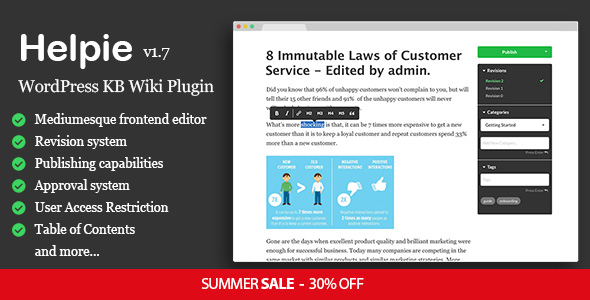
Helpie is a knowledge base plugin built for wikis, documentation websites, and FAQ hubs. One of its more useful features is access control: you can restrict specific content to certain user roles, which makes it practical for internal team wikis as well as public-facing documentation.
There are also user voting capabilities, so your visitors can flag whether articles were helpful. This gives you direct feedback on which entries need improving. Helpie is translation-ready with support for RTL (right-to-left) languages and WPML, which matters if your knowledge base serves an international audience. It works with the major WordPress themes and page builders, and the responsive design holds up well on mobile.
Other Features of Helpie Include:
- Font Awesome icons
- Page builder integration
- Front-end editor and publishing
- Advanced search
WP Glossary-Various USE Glossary Plugin
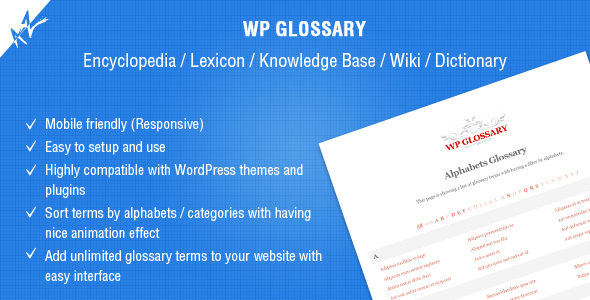
Next is WP Glossary. With this plugin you can build a searchable glossary for your WordPress site, covering use cases like encyclopedias, wikis, lexicons, knowledge bases, and dictionaries. It operates on a custom post type that gives you full editor access for each term, though you can switch to an existing post type if you prefer.
What sets WP Glossary apart is its automatic internal linking: it identifies your defined terms across your site and links each one back to the dedicated definition page. This strengthens internal linking and gives users quick access to definitions without leaving the page they’re on. The plugin is responsive and mobile-friendly, and it’s compatible with the major WordPress themes and plugins.
Other Features of WP Glossary Include:
- Fully customizable styling
- High compatibility with themes and plugins
- Several shortcodes for flexible placement
Wikiomatic-Automatic Post Generator
This next plugin is a different kind of WordPress wiki plugin. Wikiomatic is a Wikipedia-to-WordPress post importer that works in both directions: you can pull content from Wikipedia into your WordPress site, or push your posts to Wikipedia. It’s designed for auto-blogging and automatic Wikipedia post publishing, using both the Wikipedia API and Google Knowledge Graph API to generate posts based on rules you define.
Wikiomatic includes Google Translate support, so you can choose which language each generated post should appear in. There’s also Text Spinner support, which automatically substitutes synonyms in generated content, useful for reducing duplication across large auto-generated archives. If you’re building a content-heavy reference site and want to automate part of the publishing workload, this is the only plugin in this list that does it.
Other Features of Wikiomatic Include:
- Random sentence generator tool
- Automatic featured image generation for posts
- Define publishing constraints and schedules
Yada Wiki-Wiki Plugin
Yada Wiki is a free, lightweight WordPress wiki plugin that provides a dedicated wiki post type with custom tags, categories, a table of contents, and an index. It is a solid choice if you want a simple wiki structure without the overhead of a full knowledge base system.
The plugin adds two shortcode buttons directly to the WordPress editor toolbar: Add Wiki Link and Add Wiki Listing. The first opens a popup where you type the title of the wiki page you’re linking to, or enter the URL, with no need to memorize shortcode syntax. The second gives you three options for outputting a list of wiki entries. A sidebar widget displays your table of contents page and a list of article titles by category.
Which WordPress Wiki Plugin Is Right for You?
The four WordPress wiki plugins above cover different needs well. If you want a full-featured knowledge base with user voting, access controls, and FAQ support, Helpie is the strongest choice. If your goal is a glossary or dictionary that auto-links terms across your site, WP Glossary does that cleanly. For automatic Wikipedia-to-WordPress content generation, Wikiomatic is the only plugin in this list that handles it using the Wikipedia API. And if you just need a simple, free wiki post type with a table of contents and tag system, Yada Wiki gets the job done without overhead.
Check plugin update frequency in the WordPress repository before committing. Active maintenance matters for security and compatibility with current WordPress versions, and all four plugins listed here are actively maintained.
Related Posts




 Website Maintenance – Use Promocode: scanwp
  Advanced JetPlugins for Elementor
  Semrush 14 days trial
  Kinsta – Managed WordPress Hosting
  Bluehost Hosting